Deputy Chairman of the Council of Ministers
Dr. Lagumdzija – Venizelos: Necessary to create innovative EU approach for faster progress of B&H toward European integration
02/19/2014
Vijeće ministara Bosne i Hercegovine
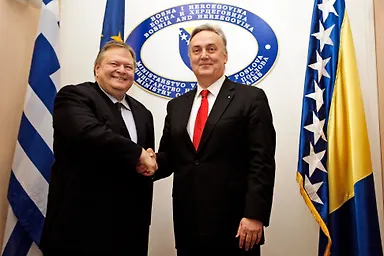
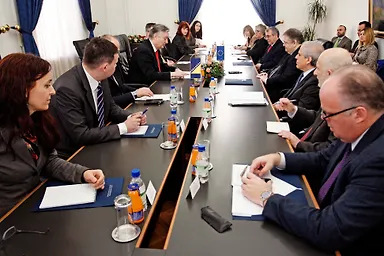
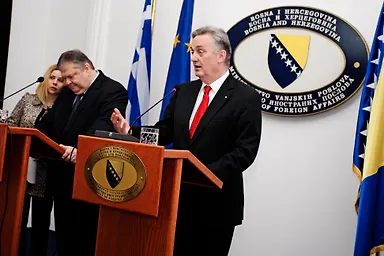
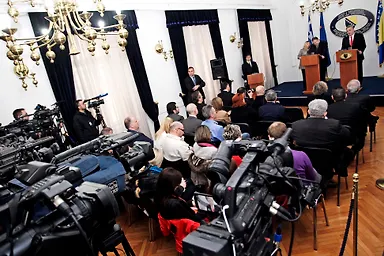
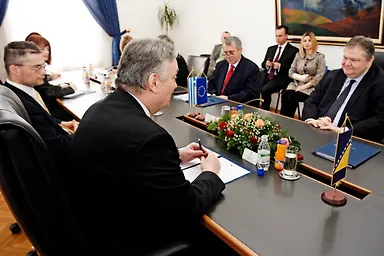
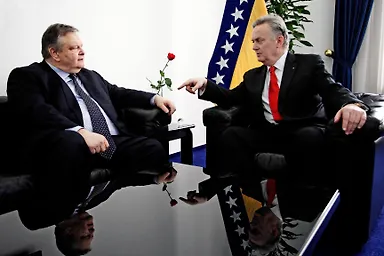
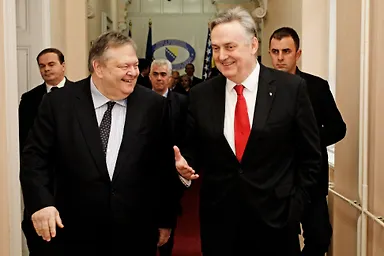
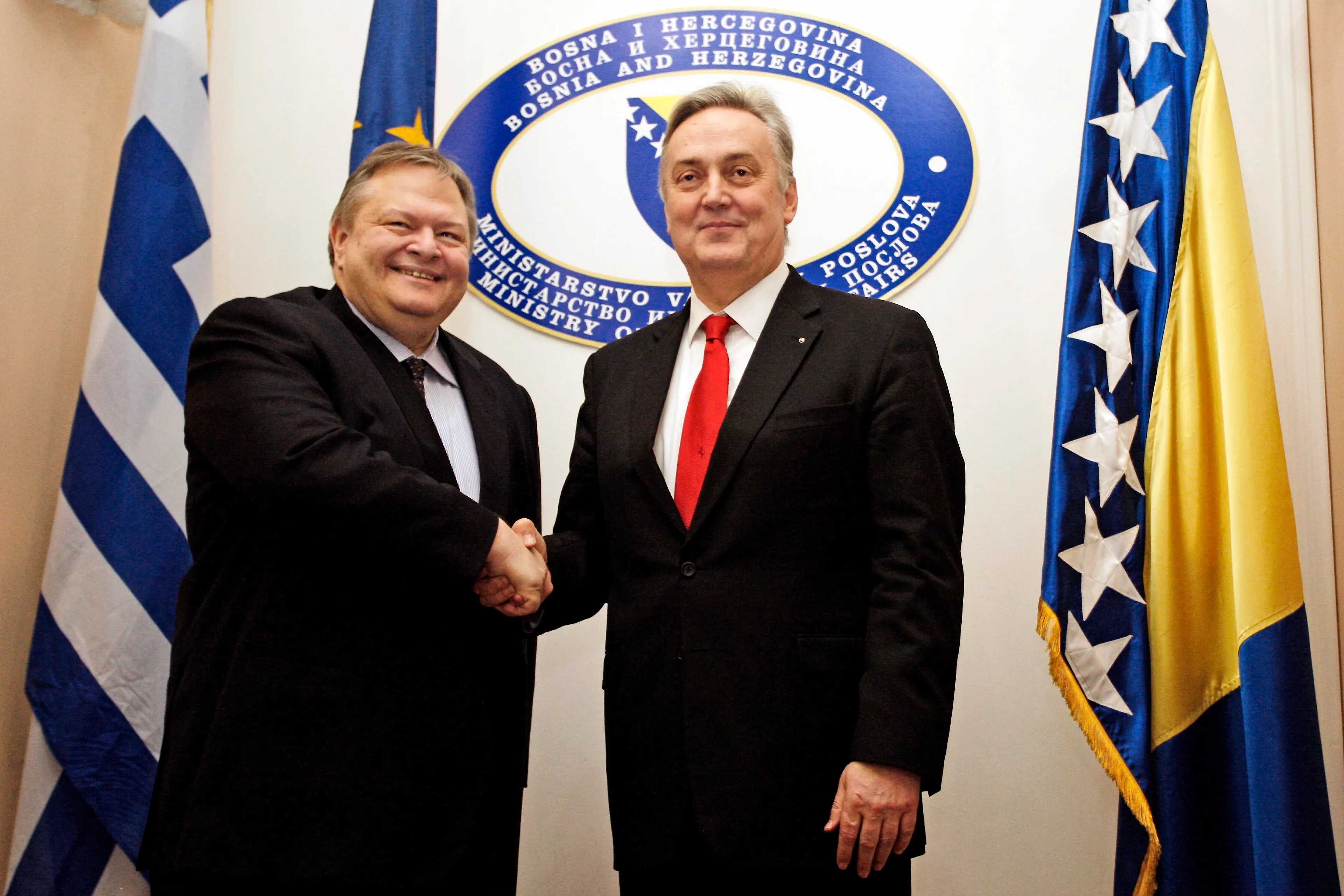
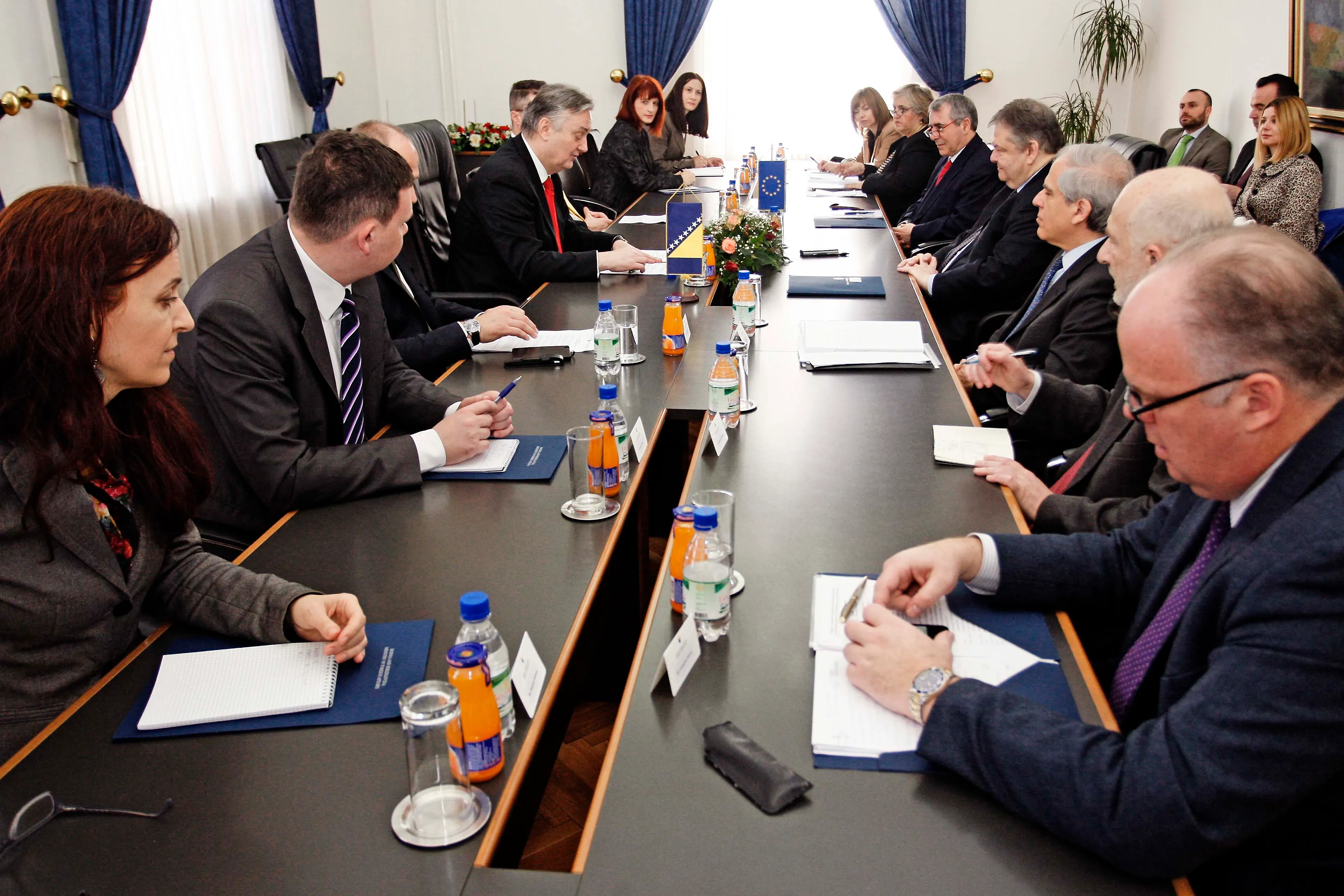
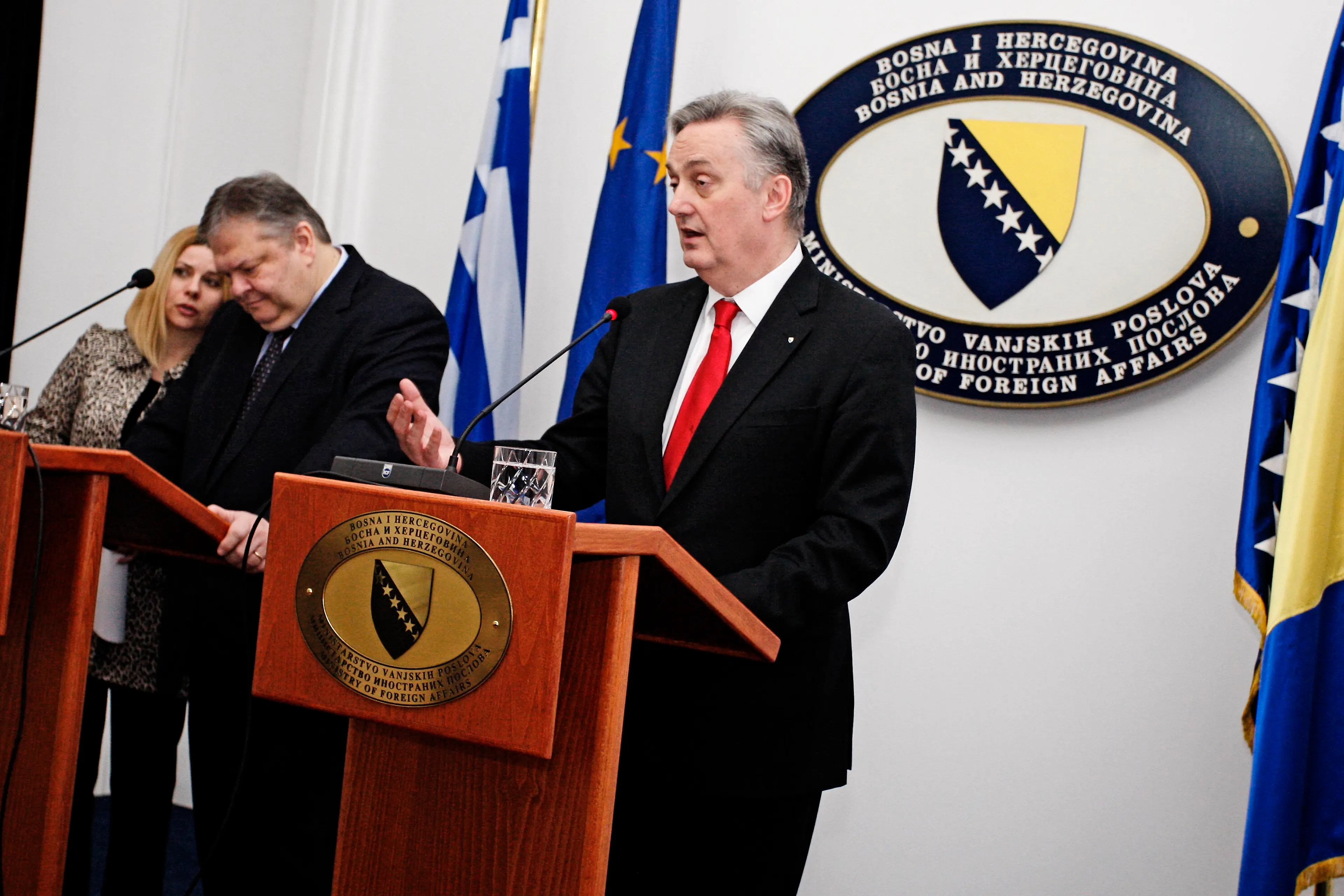
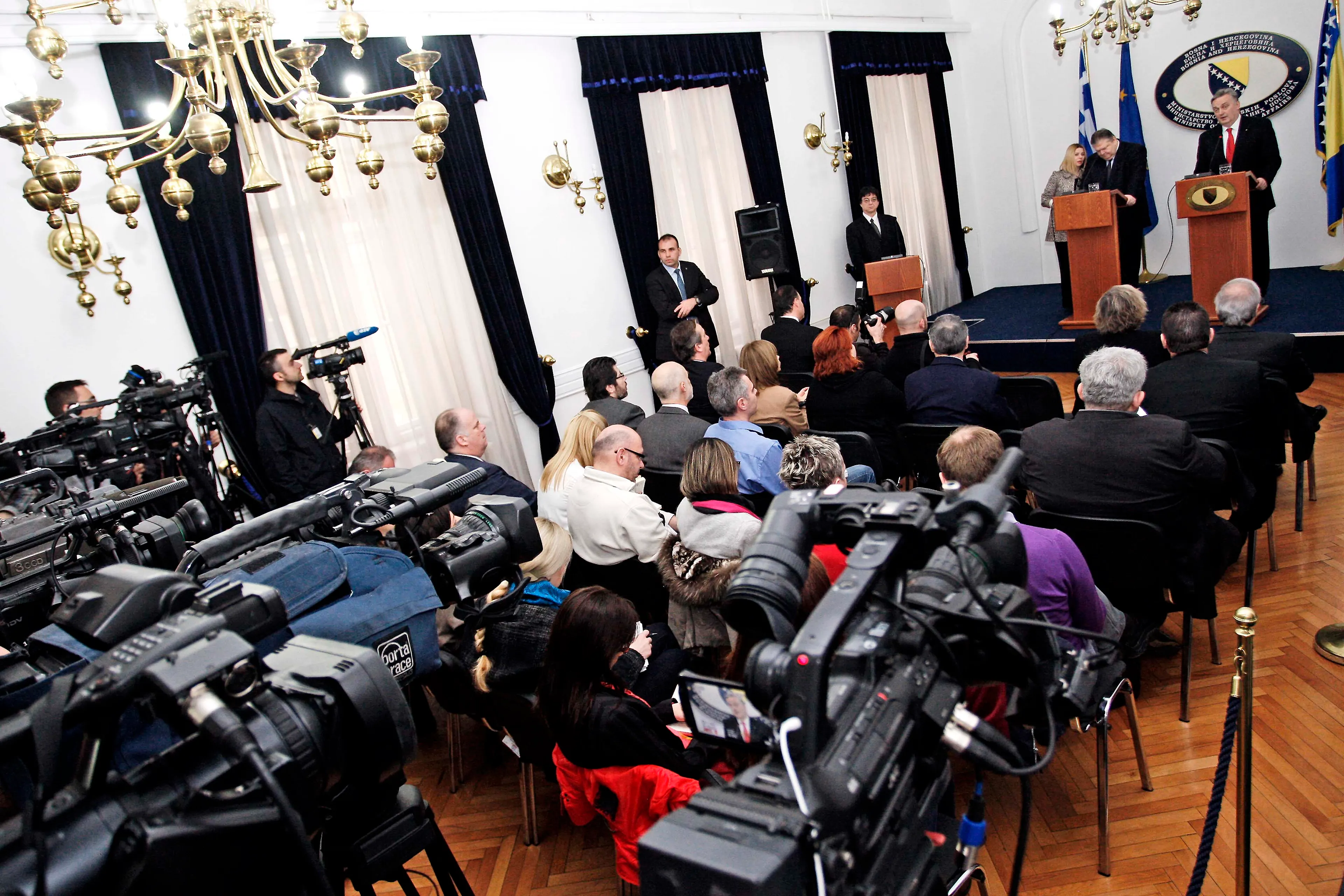
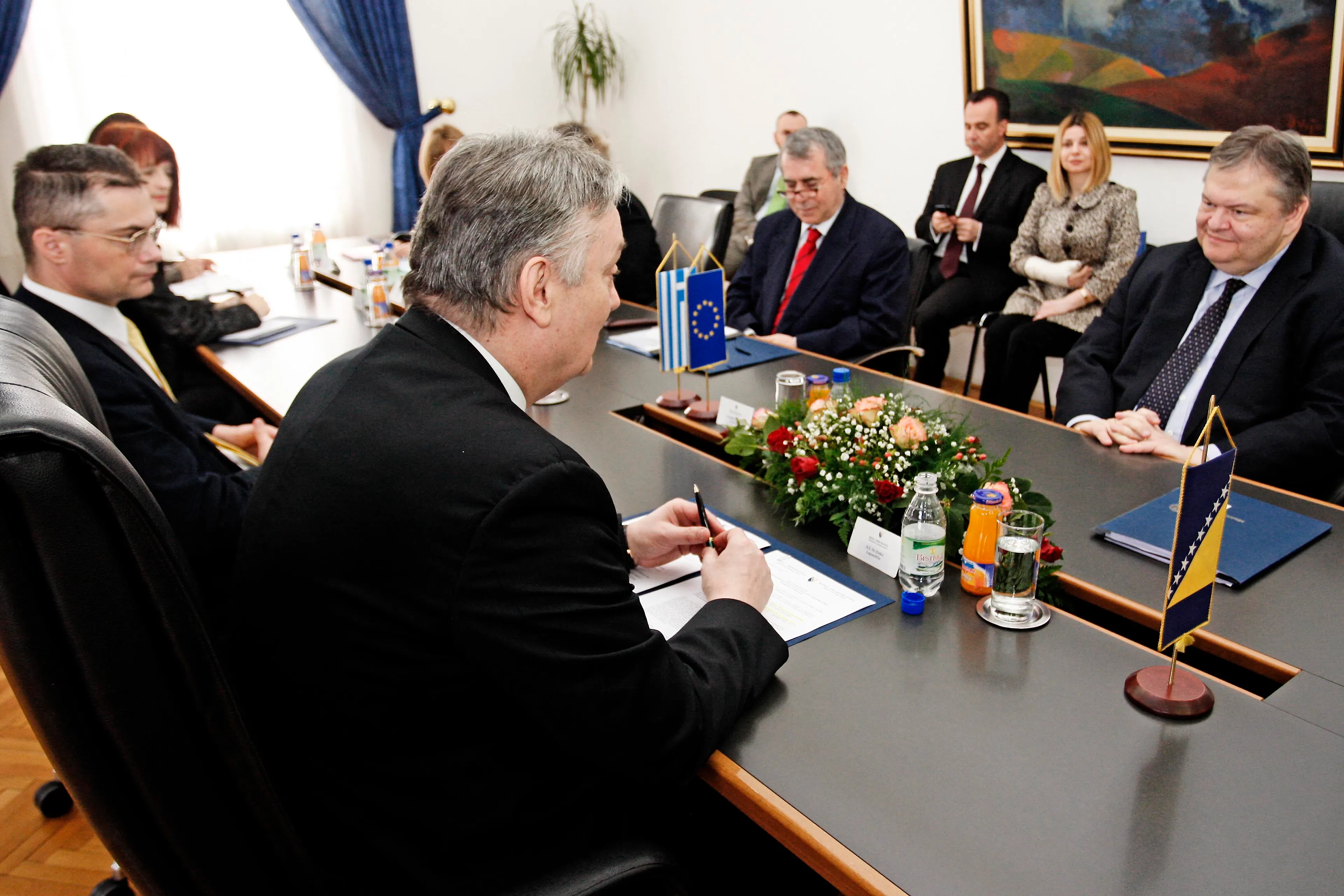
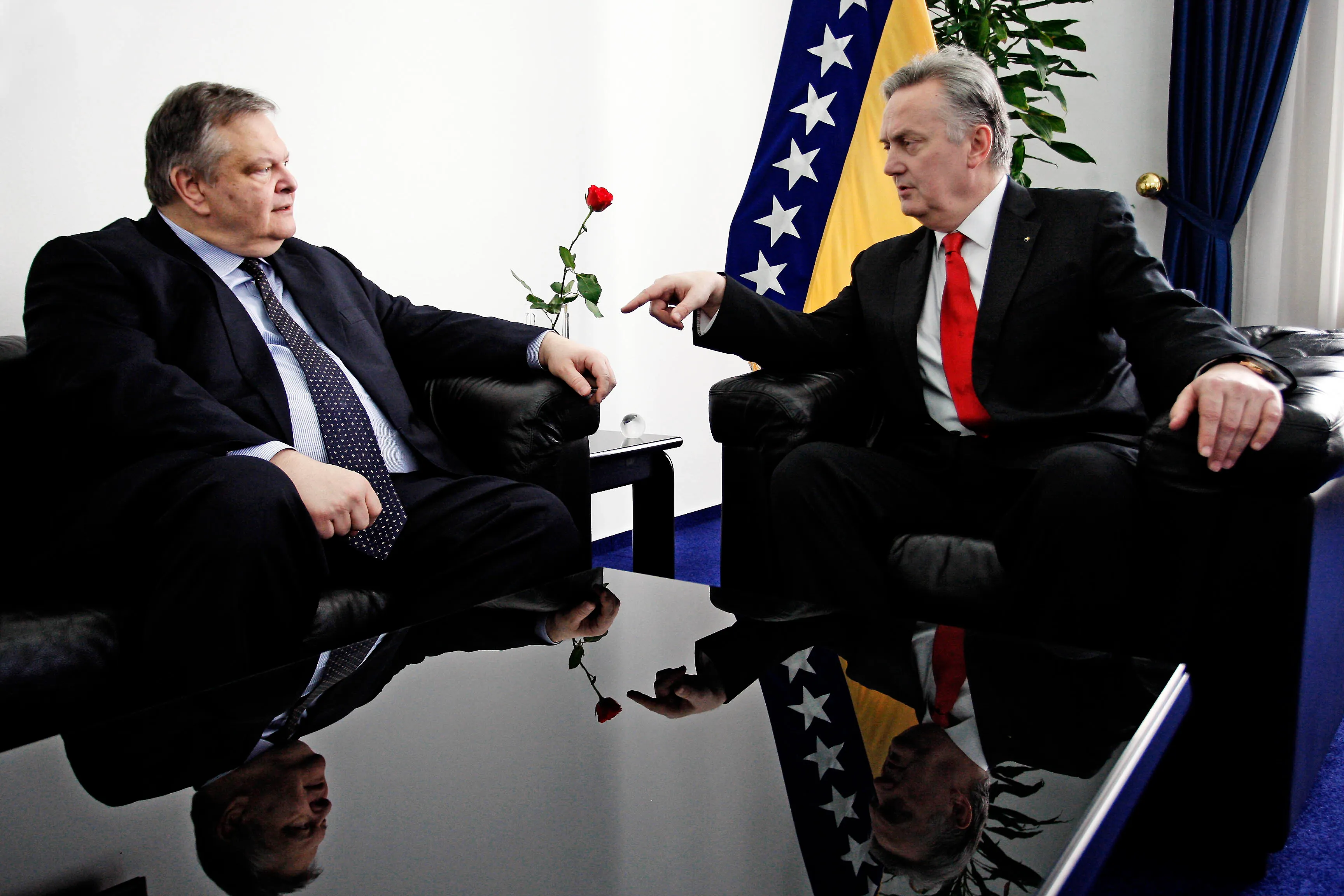
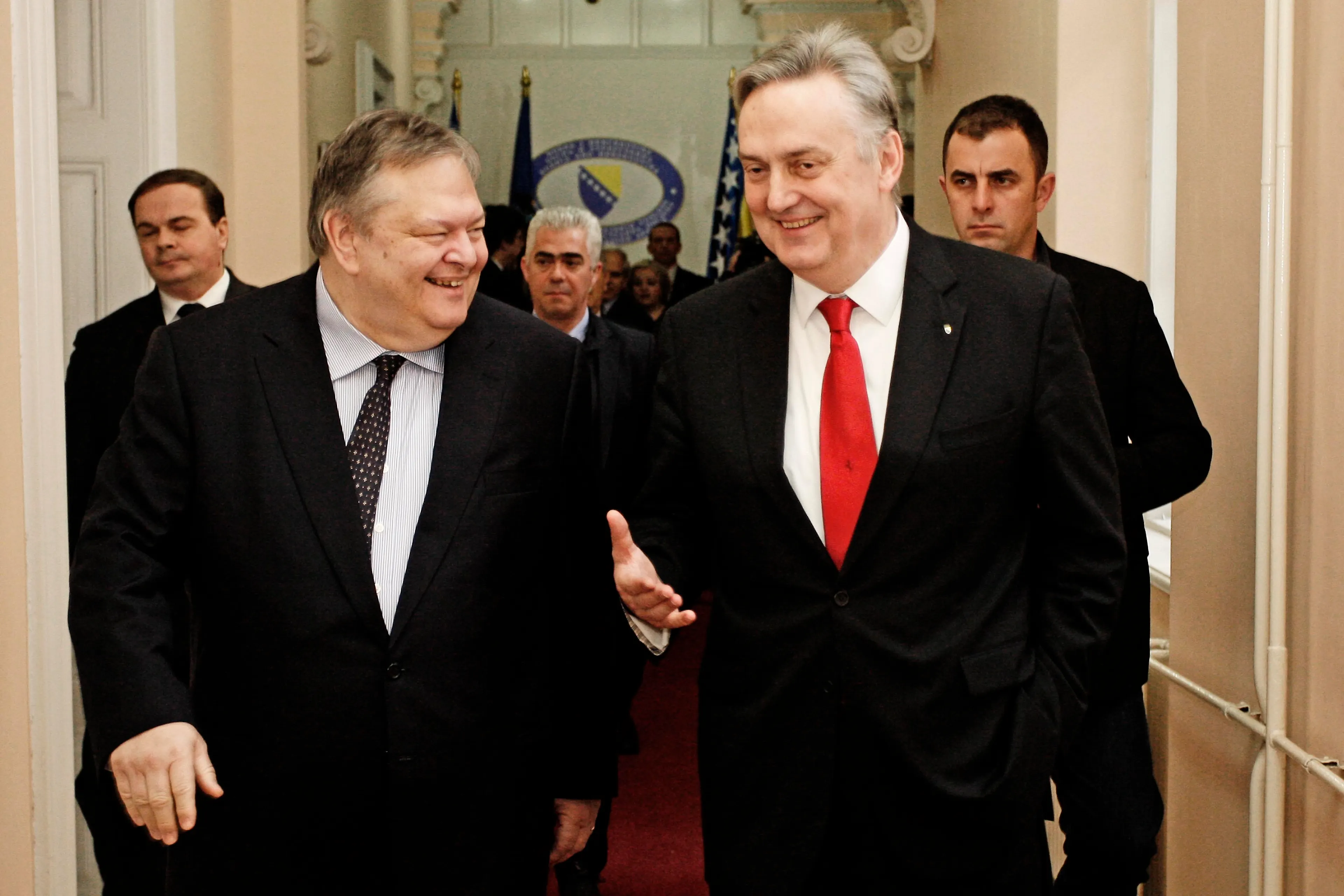
On 19 February 2014, in Sarajevo, Deputy Chairman of the Council of Ministers and Minister of Foreign Affairs of Bosnia and Herzegovina Dr. Zlatko Lagumdzija met with Deputy Prime Minister and Minister of Foreign Affairs of the Hellenic Republic Evangelos Venizelos.
Dr. Lagumdzija expressed satisfaction regarding the visit of Minister Venizelos to Bosnia and Herzegovina in capacity of the Hellenic Presidency of the Council of the European Union and stated gratitude for overall support which the Hellenic Republic and Minister Venizelos, as a proven friend of B&H, provide to our country.
Dr. Lagumdzija informed his interlocutor about the current political and economic situation in the country placing a particular accent to the European integration of Bosnia and Herzegovina. Discussing negotiations for the implementation of the ruling in the “Sejdic-Finci” case, Dr. Lagumdzija said that the EU Enlargement and Neighbourhood Policy Commissioner Stefan Fule offered a good basis for discussion in 14 points but, unfortunately, this was not acceptable for a number of participants in the discussion. He emphasized that during discussions, once more, revived ideas which meant the beginning of the process of drawing maps and proposals that led toward returning to the position which was present six months ago, when it was proposed to clearly define which cantons are one electoral unit and which belong to another electoral unit in the Federation of B&H, and assessed that as unacceptable.
Dr. Lagumdzija mentioned that no one in Bosnia and Herzegovina has the right to seek out and accept the solution which would mean a dysfunctional state that would be additionally divided as well as expressed his belief that the implementation of the judgement must lead toward further integration of B&H and not to new divisions and drawing of new maps.
He appraised that it is about time for the European Union to assist Bosnia and Herzegovina to make a more decisive move toward Brussels and consider the possibility for more specific and innovative approach to B&H with an aim to overcome existing obstacles to the European integration process, whereby open issues, that are currently set as preconditions to start negotiations on the association process, could be solved.
In that context he mentioned as particularly encouraging support of Commissioner Fule to the afore-mentioned initiative which was proposed to EU representatives and which assumes that, despite inability to reach the solution concerning the implementation in the case of “Sejdic-Finci” ruling, discussions should be accelerated and technical assistance to B&H provided regarding the implementation of Chapters 23 and 24 which are linked to the rule of law, judiciary and fighting organized crime and corruption.
Dr. Lagumdzija welcomed the agreement between Commissioner Fule and Chairman of the Council of Ministers of B&H as well as Prime Ministers of the two entities that lead to establishing more efficient mechanisms for the rule of law and fighting corruption and organized crime that are in compliance with European standards, and which represents a clear signal that national and international officials understood the message of deprived citizens which obviously asked for review of the privatization process, finding those accountable for companies that are destroyed in the privatization process, corruption and criminal in B&H.
Minister Venizelos thanked Dr. Lagumdziji for that information and emphasized that the European Union and Greece will continue to support Bosnia and Herzegovina on its path to European integration as well as pointed out that Greece, as a friendly country to Bosnia and Herzegovina, will continue to support the people of B&H.
He assessed that it is very important to preserve stability and integrity of Bosnia and Herzegovina as well as that political entities in B&H understood the level of their responsibility, underlining that he did not come to B&H in order to provide recommendations or make any pressure but to learn more about the current situation and present assessments to the Council of the EU.
At the meeting Dr. Lagumdzija informed his interlocutor with positions of B&H concerning the negotiations between B&H and the European Union in relation to signing the Protocol with the Interim Agreement on Trade and Trade-Related Matters after the Republic of Croatia joined the EU and it was also discussed about cooperation between B&H, Greece and other countries in the region on the subject of the Trans-Adriatic Pipeline project (TAP) and correspondingly the Ionian-Adriatic Pipeline (IAP).