
Deputy Chairman of the Council of Ministers
Statement delivered by Dr. Lagumdzija at the International Donors` Conference for BiH and Serbia in Brussels
07/15/2014
Vijeće ministara Bosne i Hercegovine
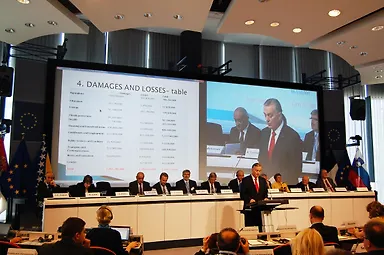
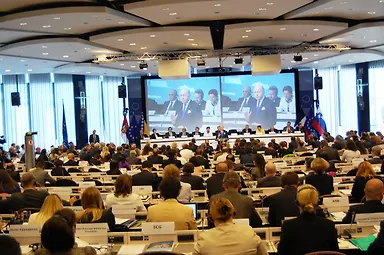
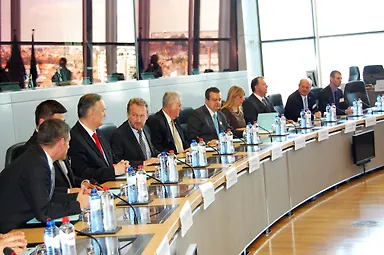
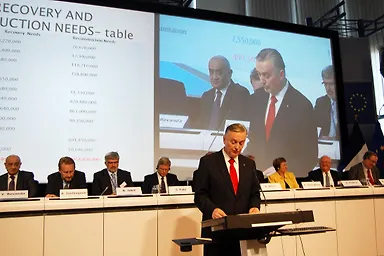
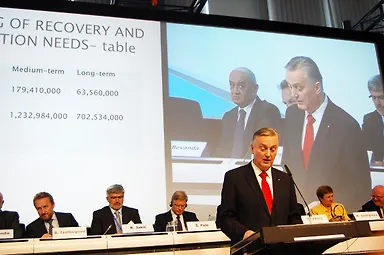
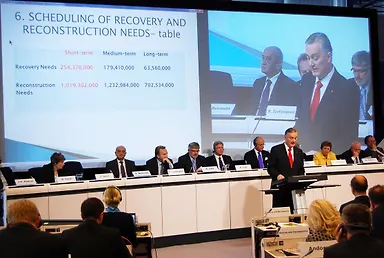
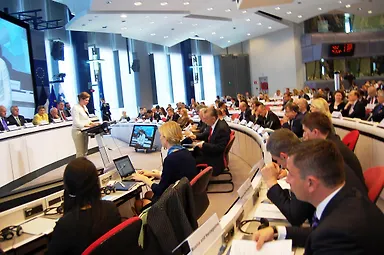
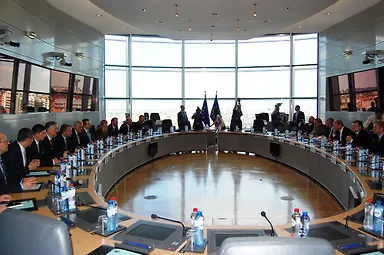
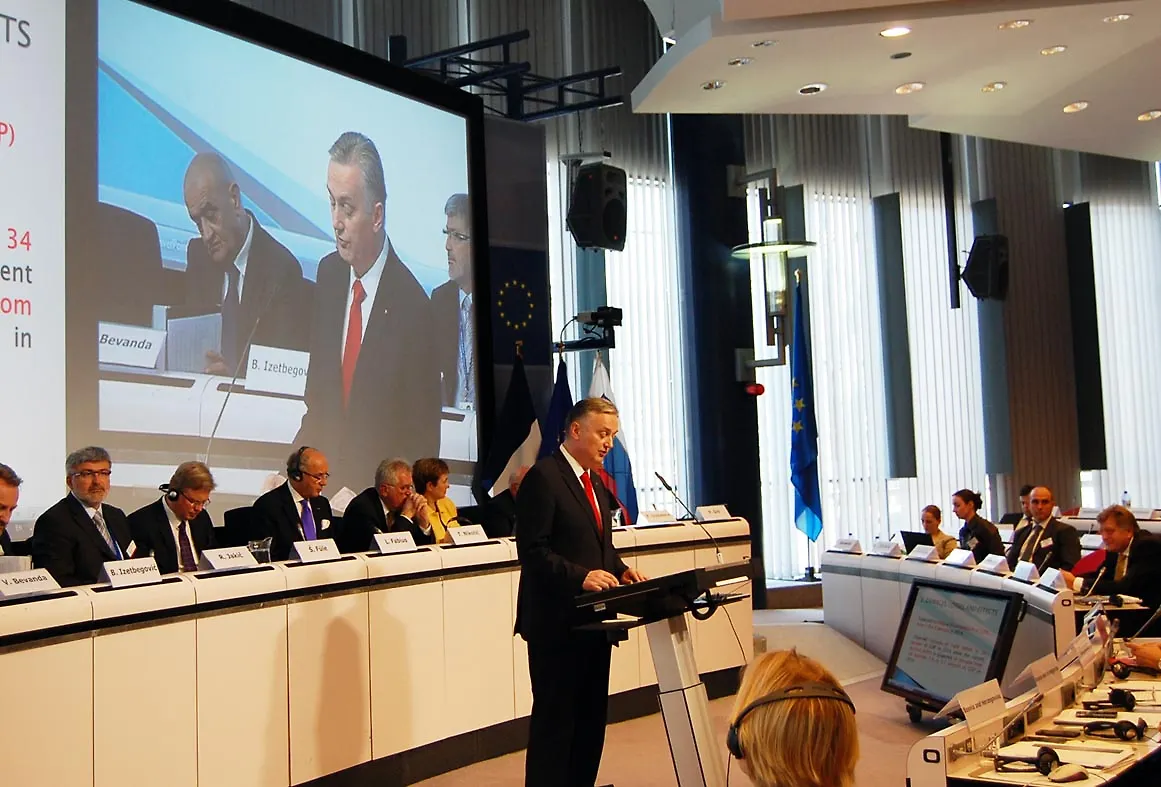
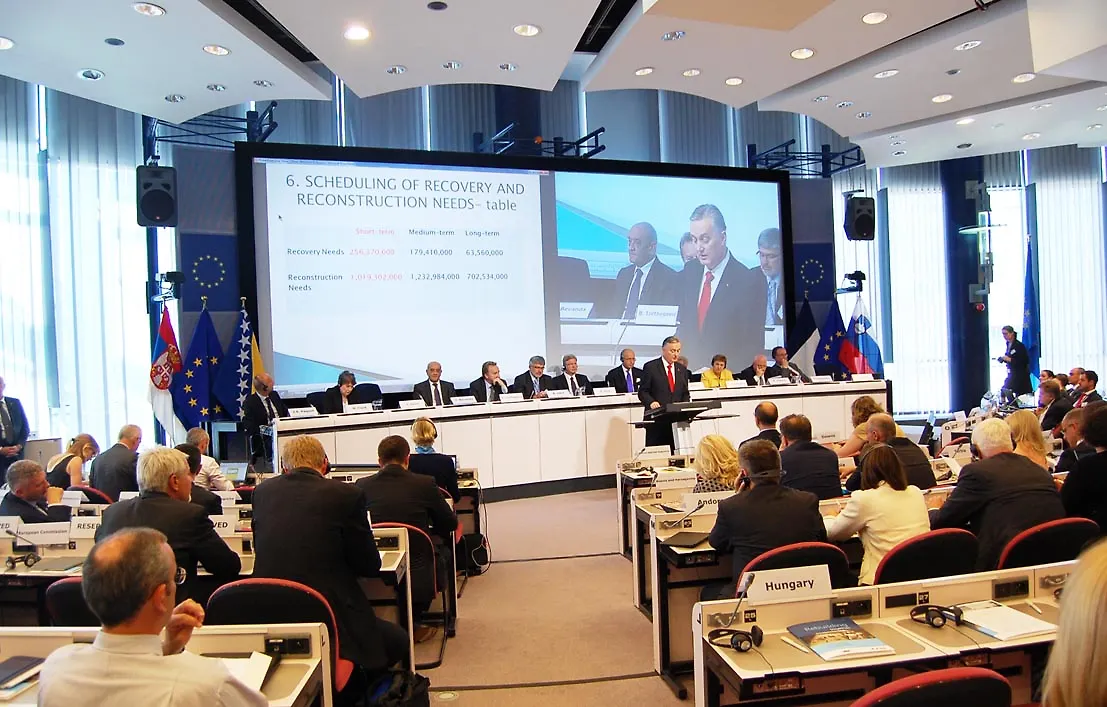
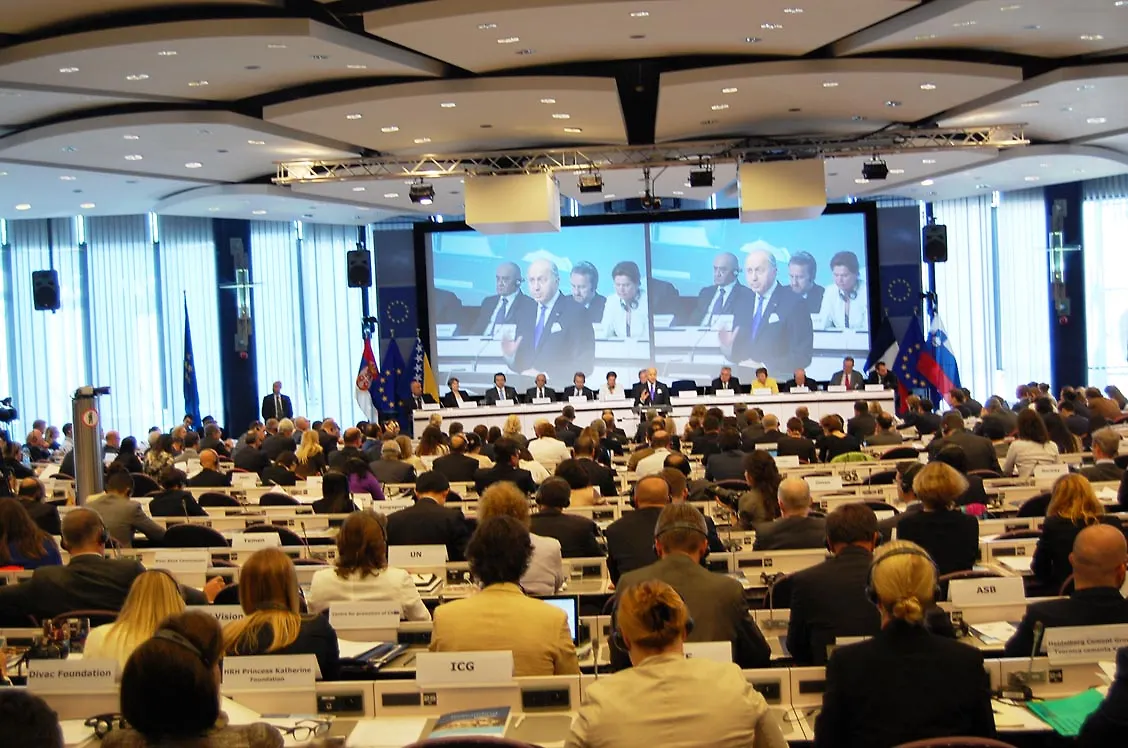
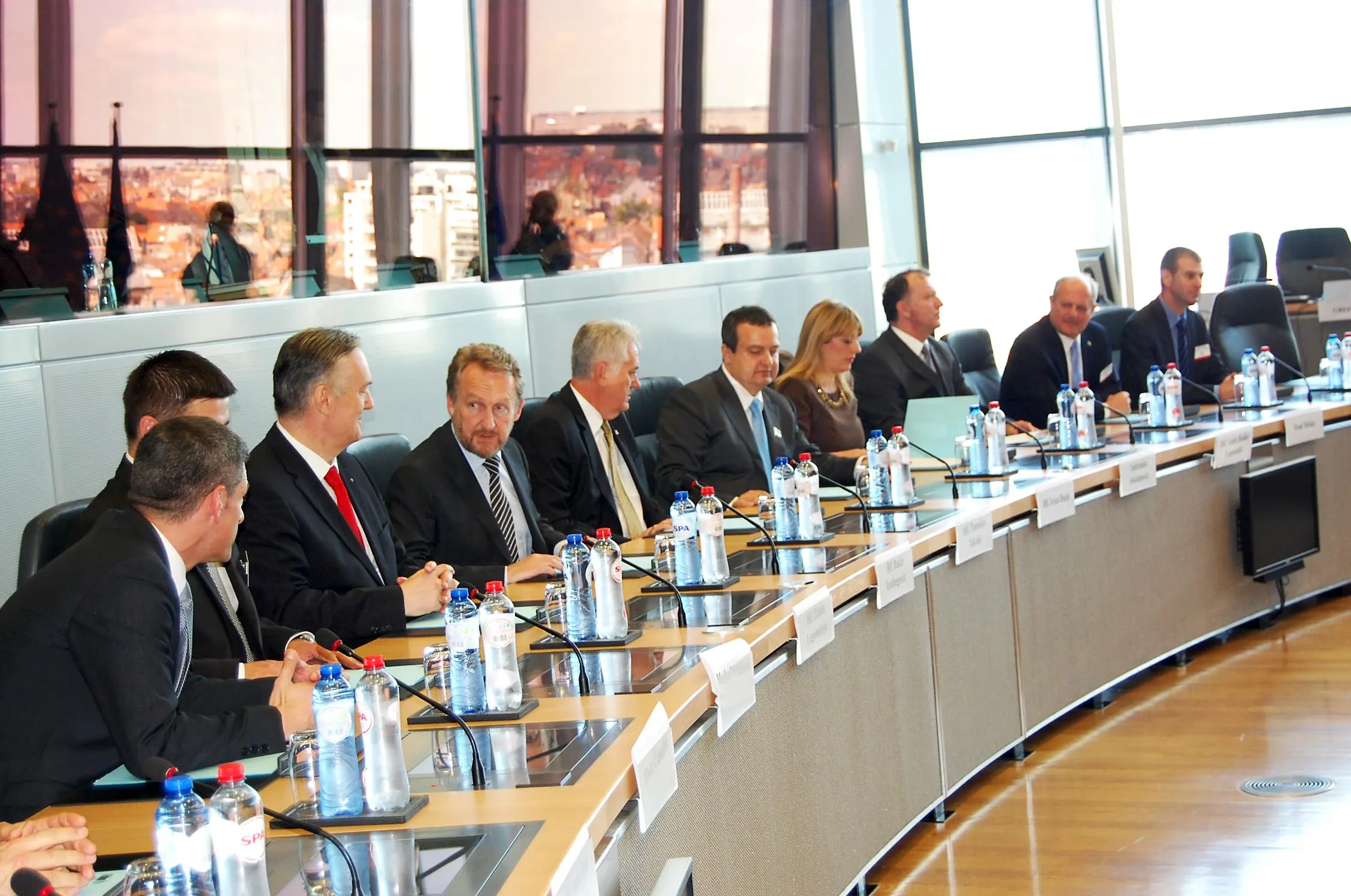
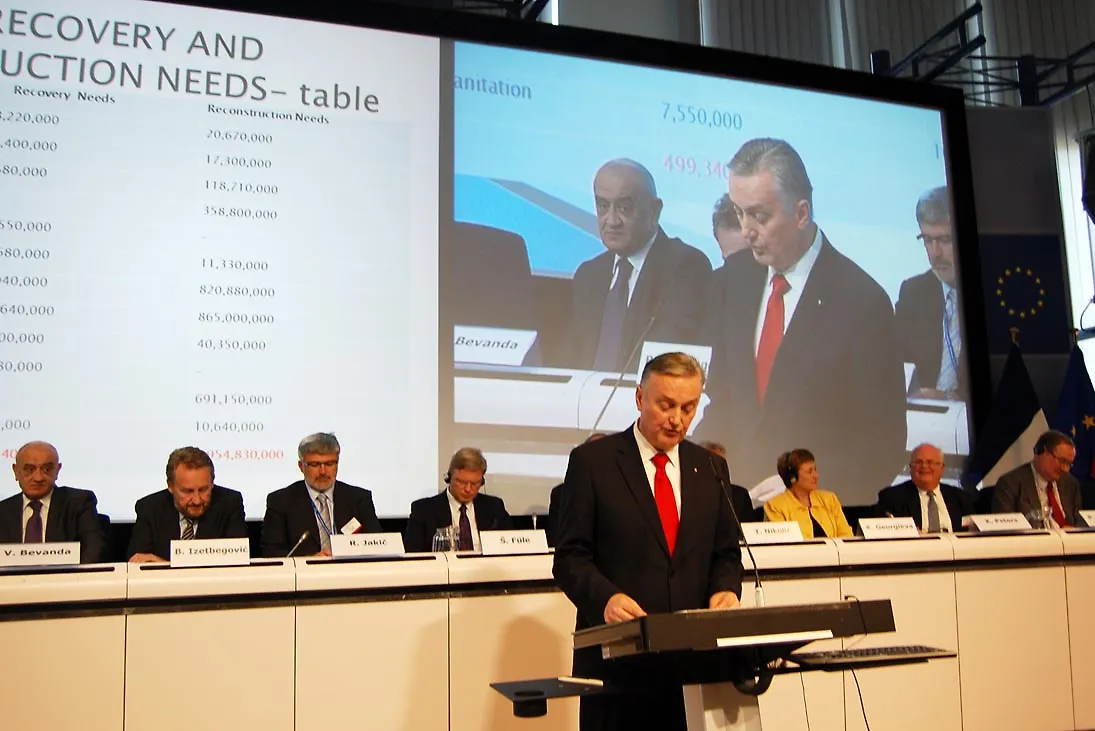
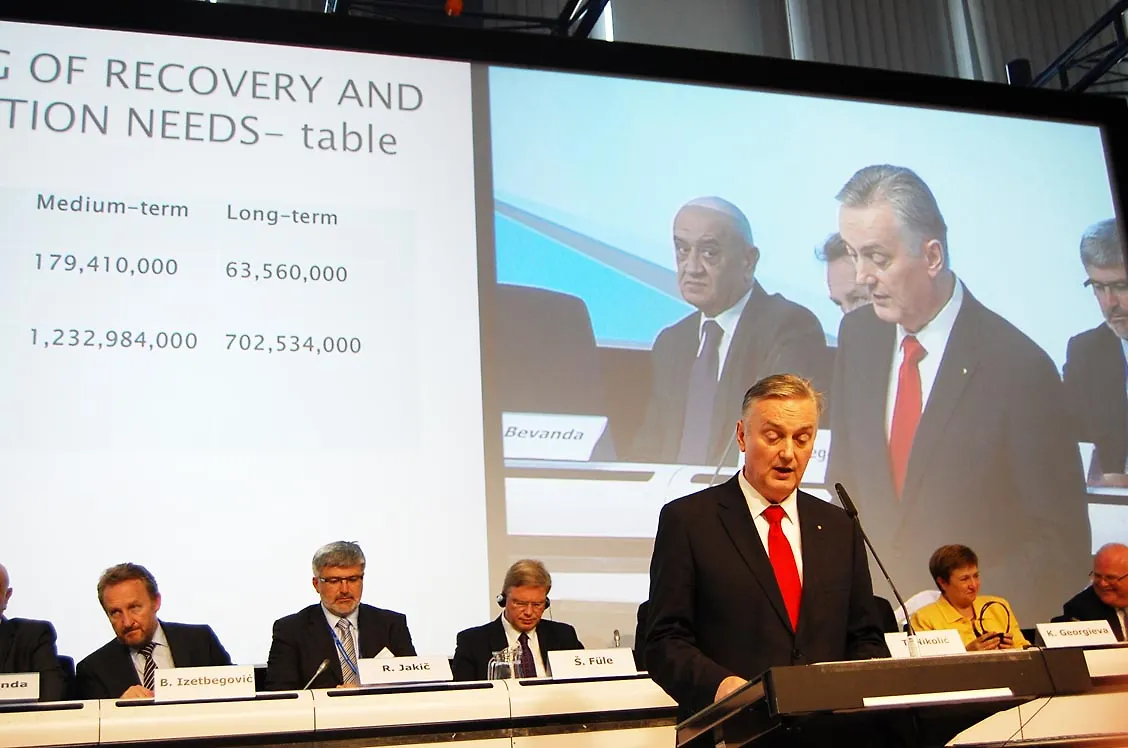
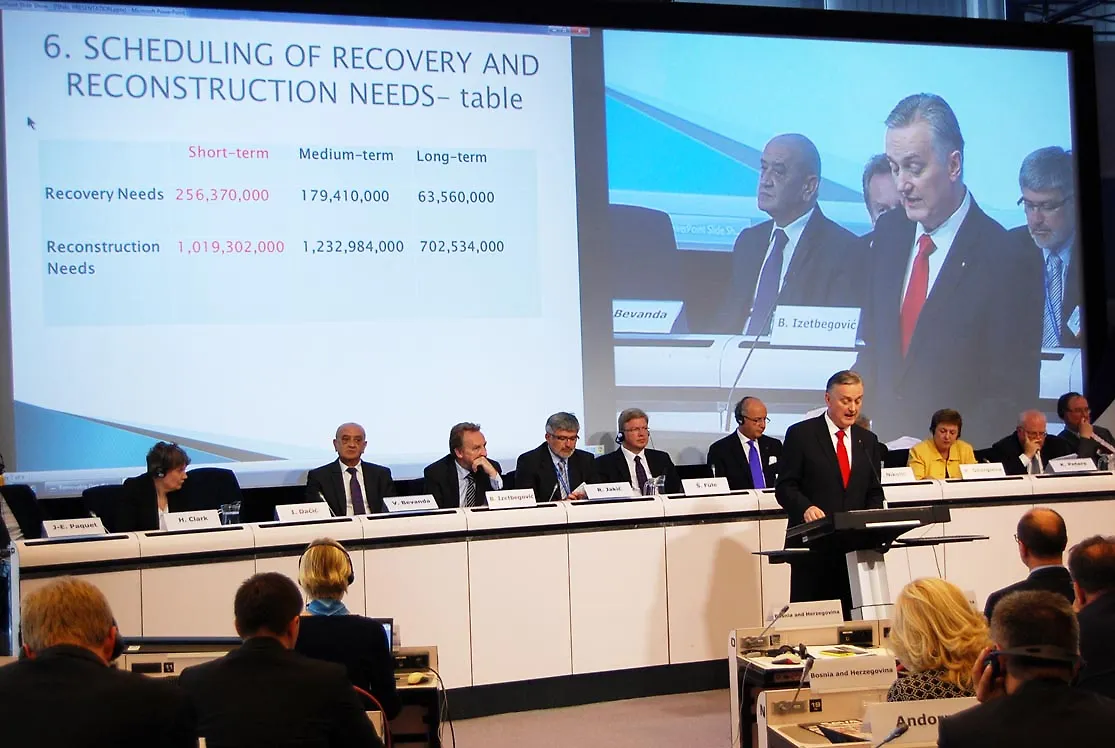
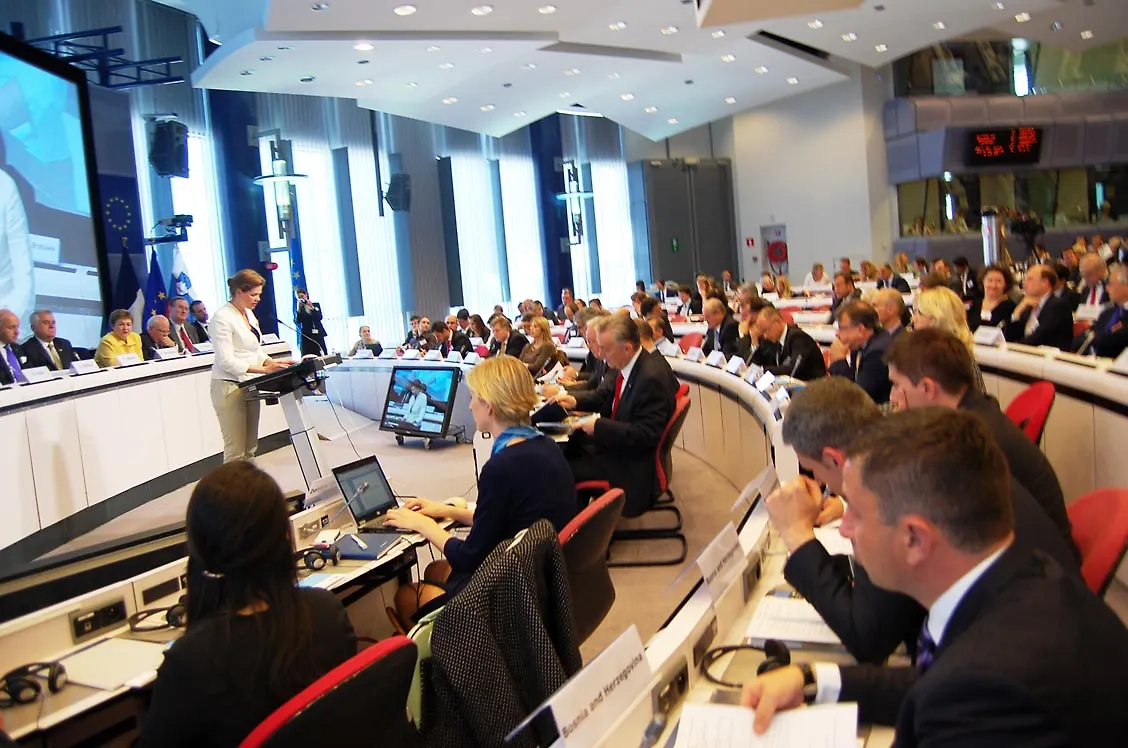
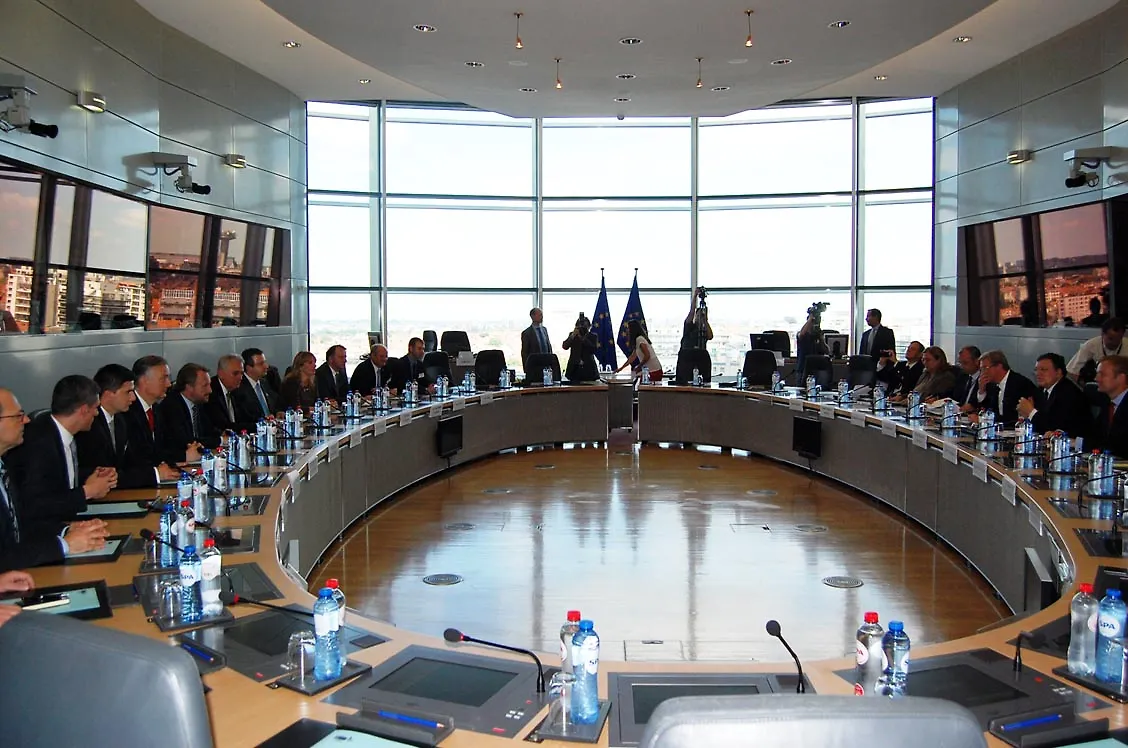
Deputy Chairman of the Council of Ministers and Minister of Foreign Affairs of Bosnia and Herzegovina Dr. Zlatko Lagumdzija made presentation of BiH needs to participants of the International Donors` Conference for BiH and Serbia that is taking place today, on 16 July 2014, in Brussels, under the motto “Rebuilding Together”.
Statement delivered by Dr. Lagumdzija in transmitted in its entirety:
“Distinguished Ladies and Gentlemen,
It is an extreme honour for me to welcome you on behalf of the Council of Ministers of BiH and on my own in this international donors’ conference targeting the flood affected population in Bosnia and Herzegovina and Serbia.
I especially thank the Governments of the Republic of France and the Republic of Slovenia which, together with the European Commission, are co-organizers and co-chairs of the Conference thus showing solidarity, faith and power of this part of Europe, as well as its potentials and perspective in these extremely difficult and specific conditions.
We are also immensely grateful to the EU, United Nations and the World Bank Team which together with experts at all levels of BiH reacted promptly and carried out enlisting and estimation of damages and losses in BiH.
I wish also to thank all Governments of friendly countries, international financial institutions, and other organizations that assisted, are assisting and will be assisting our country.
I wish to specifically emphasize the prompt reaction of the International Monetary Fund that, in addition to regular trenches, has already allocated to our country additional financial resources for dealing with negative consequences of the greatest natural disaster in written history of BiH.
Importance of other international financial institutions is equal, in particular that of the World Bank, EBRD and EIB, which approved additional loans which are expected to be made operational quite soon.
Allow me now to express a personal impression. I was convinced that the times for such donor conferences had past for Bosnia and Herzegovina. I wished and I hoped for new investment conferences that would accelerate the economic growth already achieved in 2013 and development of the entire country for the benefit and wellbeing of the Bosnian-Herzegovinian people, and investors as well. We created macro-economic preconditions for rehabilitation. Deficit was reduced from 5% to 2% of GDP. Foreign debt is around 1/3 GDP and the economic growth in this year should have been 2.2%. Unfortunately, we have to face different reality.
There is no doubt that BiH will not be able to restore effects of the natural disaster so quickly all by itself and without the international community’s assistance.
The needs assessment includes a complete review of the inflicted damage, recorded effects and expressed needs, based on information available during the assessment process.
Experts from local institutions at all levels cooperated throughout the process with their counterparts from the international community. Estimates are founded on a generally accepted international methodology based on the best international practices and standards. Sectoral teams visited all affected sites in order to meet with the representatives of entity, cantonal and municipality authorities as well as with relevant representatives of local communities, non-governmental organizations and the UN and EU field offices.
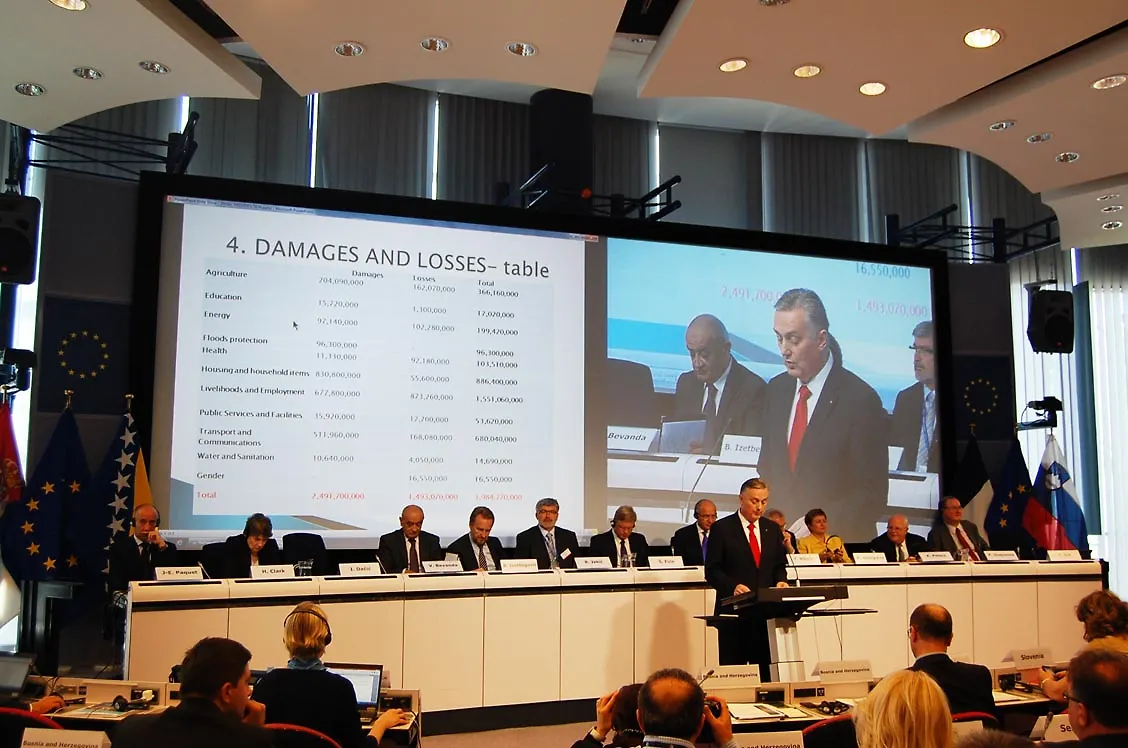
Total damages and losses caused by floods amount to 3.98 billion BAM.
The largest share of the amount is related to private sector, households, small, medium sized and large enterprises and agricultural manufacturers, including a large number of persons from disadvantaged social categories.
Priorities for short-term restoration of the affected areas are: reconstruction of houses and accompanying infrastructure, reconstruction of public facilities, including schools and hospitals, and then agriculture (cattle stock first of all) and preservation of jobs.
It is estimated that floods in Bosnia and Herzegovina caused damage and losses of more than 15% of GDP or more than 4 years of the BiH institutions’ budget.
Decrease of economic activities from the initial 2.2% to below 1% is expected to take place in this year as the result of floods.
In addition, it is realistic to expect an increase in pressures on public finances, which will also increase deficit from initial value of 2% of GDP to 4.5% in 2014.
In spite of identification of additional resources from local and international financial sources (before the floods) the lack of 1.7% of GDP is evident in financing the public sector.
Different sectors and different municipalities recorded different damages due to diverse types and intensity of disaster, depending on whether the issue is about floods or landslides or movable mine fields.
Total needs of the country in the process of rehabilitation and reconstruction amount to 3.45 billion BAM. In cooperation with institutions of Bosnia and Herzegovina at all levels needs were divided into short-term, medium-term and long-term priorities.
Given that the assessment was carried out in six sectors and three thematic fields, allow me to present briefly some of the needs in the process of reconstruction and rehabilitation as well as amounts of damages and losses, in accordance with the above mentioned categorization.
Total scope of damage and losses in housing sector amounts to 886.4 million BAM, and all affected facilities are privately owned.
Taking into consideration damage level, the estimated losses stem from the need to ensure temporary accommodation, to remove waste that was generated as a consequence of the natural disaster, as well as to dislocate permanently a certain number of households, which requires new construction land lots.
Strategy to reconstruct houses destroyed by landslides must take into account the selection of locations for building new housing units in order to avoid construction in risky areas. Laws have already been adopted providing local communities with an opportunity to grant land lots and construction permits free of cost in such cases.
In the economy and employment sector, out of the total number of 2.64 million citizens in 81 flood affected administrative units, 466 000 persons were employed while 478 564 were unemployed.
Floods and landslides caused huge damage to economic and industrial facilities, buildings, raw materials, and products across Bosnia and Herzegovina in the estimated amount of 677.8 million BAM.
Additional losses, in terms of increased business costs and reduction of productivity and trade, were estimated to 873.26 million BAM in the whole country.
In the course of the estimation process more than 3 000 persons lost their jobs. It is estimated that 13 500 jobs are in direct danger while 50 171 jobs are considered at risk.
In accordance with that and taking into consideration the fact that the current estimates show that 4.4 persons depend on every working position, 300 000 persons are in direct economic danger. We must add to these figures the informal sector as well, which according to some studies, is estimated to be between 30% and 40% of the economy.
Total funds needed for reconstruction and recovery are estimated to 1 048.64 million BAM.
Total estimate of damage inflicted on traffic and communication sector is more than 512 million BAM.
Total estimated amount of needs is based on a percentage of 35% of the amount of total damage (about 180 million BAM).
Agriculture is one of the most important sectors of BiH economy where the total damage is estimated to 204.09 million BAM, and losses are estimated to 162.07 million BAM.
Total amount for reconstruction and rehabilitation in agriculture is 88.89 million BAM of which 43% (38.3 million BAM) for urgent action phase; 34% (30.23 million BAM) for medium-term recovery of agricultural sector, and 23% (20.44 million BAM) for the long-term recovery.
Total needs for recovery in energy sector are estimated to 125.39 million BAM.
Total amount for reconstruction and recovery in public services sector is estimated to 60.25 million BAM for recovery and 40.35 for reconstruction.
An amount needed for reconstruction and recovery in education is 27.7 million BAM, and the short-term urgent phase must be completed in two months from now, by the beginning of the new school term.
Total needs in health care infrastructure and equipment amount to 104.06 million BAM.
Report shows that in water and sewer sector water supply service was threatened by intensive rains and floods that caused certain damage to the water supply systems that provide water for almost 60% of population in Bosnia and Herzegovina. 18.19 million BAM is needed for reconstruction and restoration of this sector.
Disaster risk reduction factor should be incorporated in the reconstruction strategy’s long-term plans and programmes, together with disaster resilience and adequate protection from potential floods in the future, as well as safety and gender equality issues. Needs for these purposes amount to 454 million BAM.
What we find as crucial is realization of short-term needs in BiH. Our short-term objectives are clear – ensure dwellings for all citizens of BiH who lost their homes to floods, ensure that all children start going to school in autumn, and preserve the current jobs and create new ones if possible. And we must work on this URGENTLY.
That is the reason why we ask from donors to accelerate procedures to maximum and that the funds intended for construction and restoration of damaged houses and for starting up production in companies and agricultural farms become operational as a matter of urgency.
It is of extreme importance to ensure transparency of the entire process of obtaining, allocating and spending of donor funds. Just because of that we invite once again all actors in this process that we establish a monitoring team, which will include representatives of international community, local authorities, academic community, economists and entrepreneurs, NGO sector, and media, which will supervise the process of allocation and spending of donor funds.
Furthermore, I emphasize that this donors’ conference is a beginning when it comes to international assistance for restoring the effects of floods in Bosnia and Herzegovina rather than the end of a rehabilitation process.
I wish to thank the organizers of the conference, the Governments of France and Slovenia, and in particular to the European Commission that expresses equal solidarity to BiH and Serbia, and in particular to Ms. Georgieva, Commissioner, who was among the first high level officials visiting BiH following the floods and who expressed solidarity of the EU towards our country.
Restoring the country is an opportunity for new and accelerated reforms from the economic growth and rule of law package.
Once again I call upon all of us for unity and solidarity that citizens of BiH showed during the floods. Let’s be united in this process at least as the time has come for resolving rather than for creating problems. It is time for working not for talking.
Today we show that we are united, ready for new beginning, aware of the sense of urgency and necessary transparency.
Today we show success here to the extent in which we cover the short-term, urgent needs defined here and to which we open the process of further reconstruction of the country.
Today, I believe in success.
Thank you for your attention.”